
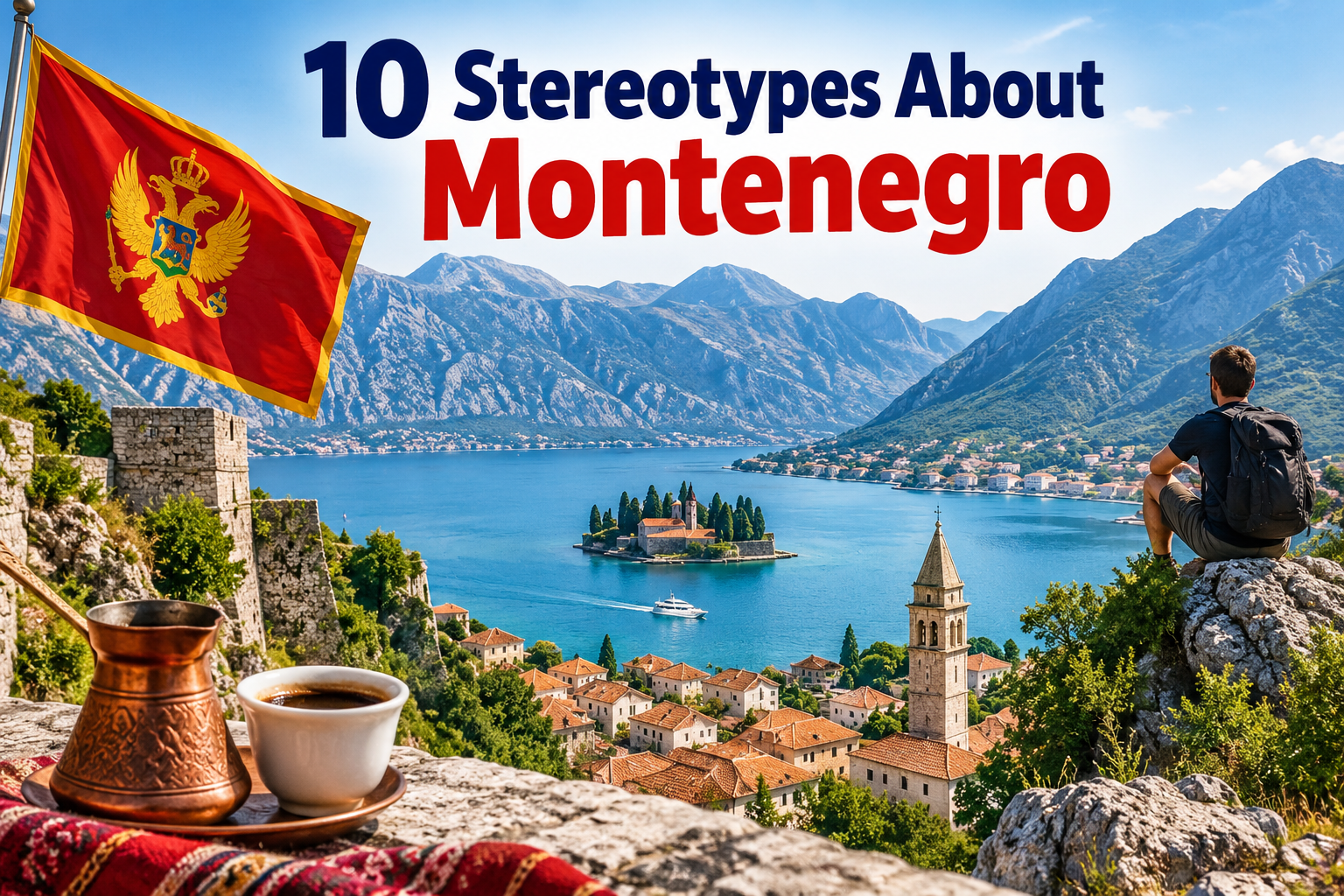
Montenegro is a small country with a big personality. Located on the Adriatic coast and surrounded by dramatic mountains, Montenegro has attracted visitors with its beaches, historic towns, national parks and Mediterranean atmosphere. Like every country, however, it is also surrounded by stereotypes.
Some of these ideas are based on real aspects of Montenegrin life, while others are exaggerated, outdated or simply humorous. Here are 10 common stereotypes about Montenegro and the reality behind them.
1. Montenegrins are extremely relaxed
One of the most common stereotypes is that people in Montenegro are never in a hurry. The image of a Montenegrin enjoying a long coffee while the rest of the world rushes around is widespread.
There is some truth behind the stereotype: socializing, coffee and enjoying time with friends are important parts of everyday life. But, of course, Montenegrins work, study and deal with busy schedules just like people everywhere else.
2. Everyone lives by the sea
When people hear “Montenegro,” they often immediately imagine the Adriatic coast, beaches and crystal-clear water.
But Montenegro is much more than its coastline. A large part of the country is mountainous, and cities such as Podgorica, Nikšić and Žabljak have very different landscapes and lifestyles from the coastal towns.
3. Montenegro is just a summer destination
Another stereotype is that Montenegro is only worth visiting during the summer.
In reality, the country offers very different experiences throughout the year. The mountains provide opportunities for hiking, skiing and other outdoor activities, while historic towns and national parks can be explored outside the busy summer season.
4. Montenegrins are very tall
Montenegro has a reputation for being a country of exceptionally tall people. Visitors sometimes joke that finding someone shorter than average can be difficult.
The stereotype is partly connected to the relatively high average height reported in populations from the western Balkans. Nevertheless, Montenegro obviously has people of all heights.
5. Everyone drinks coffee for hours
Coffee culture is an important part of social life in Montenegro. Meeting friends for coffee can mean much more than simply having a drink.
A quick coffee can easily turn into a long conversation, which has helped create the stereotype that Montenegrins can spend half the day sitting in a café.
6. Montenegrins are extremely proud of their country
Montenegrins are often portrayed as very proud of their national identity, history and independence.
The country’s history is indeed a major part of its identity. Montenegro has a long and complex past, and its mountainous geography helped shape a strong sense of independence and local identity.
7. Everyone is connected to the mountains
Because Montenegro is famous for its spectacular mountains, another stereotype is that every Montenegrin is an experienced mountaineer or hiker.
While outdoor activities are popular, not everyone spends their weekends climbing mountains. For many people, everyday life is much more urban and ordinary than the country’s dramatic landscapes might suggest.
8. Montenegrin food is all about meat
Visitors often associate Montenegro with grilled meat, hearty Balkan dishes, cheese and smoked products.
Traditional cuisine certainly includes plenty of meat, but Montenegrin food is more diverse than this stereotype suggests. Along the coast, seafood and Mediterranean influences are particularly important, while different regions have their own culinary traditions.
9. Montenegro is a tiny country where everyone knows everyone
Because Montenegro has a relatively small population, people sometimes imagine it as one enormous village where everybody knows everybody else.
There can indeed be strong family, regional and community connections, but Montenegro also has modern cities, universities, businesses, tourism and a diverse population. Not every Montenegrin knows every other Montenegrin!
10. Life in Montenegro is always like a postcard
Perhaps the biggest stereotype is that Montenegro is permanently sunny, peaceful and beautiful.
The country really does have spectacular scenery, from the Adriatic coast to the mountains and deep river canyons. But behind the tourist images is a normal country with traffic, work, bureaucracy, economic challenges and everyday problems.
Conclusion
Stereotypes can be entertaining, but they rarely tell the whole story. Montenegro is a country of contrasts: Mediterranean coastlines and rugged mountains, historic traditions and modern cities, quiet villages and busy tourist destinations.
The best way to understand Montenegro is to go beyond the stereotypes and experience the country for yourself. What may look like a simple postcard from the outside is actually a place with a rich history, diverse landscapes and a unique culture.